
HOW TO PLAY
The rules of every game and mode on SLAM 6.
Every game
- You're matched with a player at your level — every game has its own hidden skill rating.
- Both players get the same clock, and in the races the same board or letters.
- Quitting, or closing the window and not coming back within 10 seconds, is a forfeit — you lose the match.
- Lost your connection in dominoes or Mancala? You have 30 seconds to come back. In the races the clock keeps running.
- Want to warm up first? Every game has a free version on the Practice page.
Dominoes
- A double-six set: 28 tiles, each with two ends of 0–6 pips.
- Play a tile whose end matches an open end of the line. If nothing you hold fits, you pass — you can't pass while a tile fits.
- The very first hand opens with the highest double (the table is asked for 6-6, then 5-5…; press Pass if you don't have it). After that, the winner of the last hand leads with any tile.
- A hand ends when someone plays their last tile. If nobody can play, the hand is blocked and the fewest pips in hand wins it.
- Every turn is 15 seconds. If your time runs out, the biggest tile that fits is played for you.
Dominoes Blitz
- 1 v 1, 7 tiles each from the 28.
- Best of three hands — win two to take the match.
Dominoes Swap Hands
- 1 v 1, played in two halves.
- Half two is the same deal again with the hands swapped, so the luck of the deal cancels out.
- Fewest pips left over both halves wins the match.

Dominoes Graveyard
- 1 v 1, 7 tiles each; the rest lie face-down in the graveyard.
- Stuck? Draw from the graveyard until a tile fits — after a draw you have 30 seconds to play.
- Best of three hands.
Dominoes Four Man
- Four players, 7 tiles each, one hand.
- First to play out takes 1st place; everyone else is placed by fewest pips left.
- A player who leaves is placed last of those still in, and the hand goes on.
Mancala
- Six pits each and a store at each end; every pit starts with 4 stones.
- On your turn pick one of your pits and sow its stones one at a time counter-clockwise — into your own store, never your opponent's.
- Relay sowing: if your last stone lands in a pit that already had stones, scoop them all up and keep sowing. Your turn ends in an empty pit or your store.
- Last stone in your own store: go again. Last stone in an empty pit on your side with stones opposite: capture both into your store.
- When one side's pits are all empty the game ends; each player keeps the stones left on their own side. Most stones in the store wins.
Mancala
- One game, 1 v 1.
- 30 seconds a move.

Mancala Blitz
- One game, 10 seconds a move.
- If your clock runs out, your first pit is played for you.
Mancala Best of 3
- First to two game wins takes the match.
- The first move alternates each game.
- A 24–24 game is replayed.
Minesweeper Race
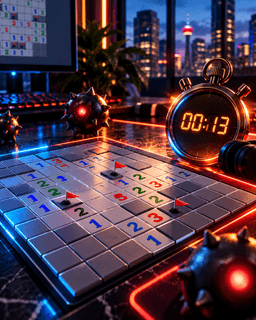
Minesweeper Race
- Both players get the same board — 16 × 16 with 40 mines, always solvable without guessing — and the same 60-second clock.
- Click to dig; right-click or long-press to flag; click a number whose flags are all placed to clear around it.
- Hit a mine and you lose. If both hit one, whoever hit it first loses.
- Otherwise most cells cleared wins; on a tie, whoever got there first.
- Done early? Lock in your score — that ends your race only; your opponent plays on until they lock in too or their clock runs out.
Anagram Race

Anagram Race
- Both players get the same 9 letters and the same 60-second clock.
- Spell words of 3 letters or more — click the tiles or type, Enter plays, Space shuffles. Each tile once per word; every tile comes back for the next word.
- Points by length: 3 letters 3, 4 letters 4, 5 letters 5, 6 letters 9, 7 letters 11, 8 letters 12, all nine 18. A word counts once.
- Most points wins; on a tie, whoever got there first. British and American spellings both count.
- Done early? Lock in your score — that ends your race only; your opponent plays on until they lock in too or their clock runs out.
Solitaire Race
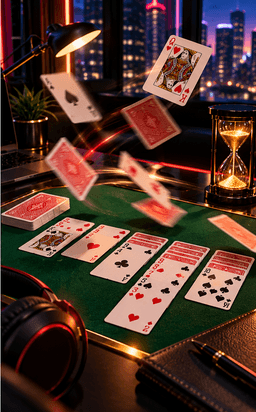
Solitaire Race
- Klondike, draw 1. Both players get the same deal and the same 2-minute clock.
- Build the four foundations up by suit from Ace to King. On the seven piles, build down in alternating colours; only a King (or a run starting with one) goes in an empty pile.
- Click a card — or the top of a face-up run — then click where it goes. Double-click a card to send it straight to its foundation. Click the stock to turn a card; when it runs out, click again to turn the waste back over, as often as you like.
- Most cards on the foundations wins; on a tie, whoever got there first. Get all 52 up and you win on the spot.
- Done early? Lock in your score — that ends your race only; your opponent plays on until they lock in too or their clock runs out.
Sudoku Race
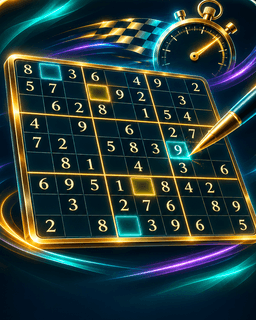
Sudoku Race
- Both players get the same sudoku and the same 3-minute clock. Fill the grid so every row, every column and every 3 × 3 box holds 1 to 9 once each.
- Tap a cell, then a number (or type 1–9; Backspace clears; the arrow keys move). The clues can't be changed. A digit that appears twice in a row, column or box shows red.
- Your entries aren't marked right or wrong as you go. At the end, your score is the cells cleared: the clues, plus your right entries, minus your wrong ones — so a guess can cost you.
- Most cells cleared wins; on a tie, whoever got there first. Clear the whole grid and you win on the spot.
- Done early? Lock in your grid — your opponent plays on to the end of their own clock.
Codebreaker Race

Codebreaker Race
- Both players crack the same secret code on the same 3-minute clock: 4 pegs, each one of 6 colours. Colours can repeat.
- Tap 4 colours (or type 1–6), then Guess. Each guess is marked: a gold dot for every peg that's the right colour in the right place, a white dot for every other right colour that's in the wrong place.
- You have up to 10 guesses. Crack it in fewer guesses than your opponent and you win; the same number of guesses, the faster one wins. If neither of you cracks it, it's a draw.
- Once your opponent can't beat your guesses any more, their race stops. You can give up (your race ends uncracked); quitting, closing the window and not coming back within 10 seconds, or not making one guess is a forfeit.
Poker

No-Limit Texas Hold'em
- Six-seat cash tables. The chip you pick is your buy-in: 100 big blinds — from $5 (2¢/5¢ blinds) up to $1,000 ($5/$10 blinds). You take a seat at a table at that buy-in and play from that stack; players come and go between hands, and someone who sits down is dealt in from the next hand.
- Each hand you get two cards face down; five shared cards come face up in the middle — three on the flop, then the turn, then the river. Make the best five-card hand from your two and the five.
- The dealer button moves one seat every hand. The small blind is left of the button, then the big blind; before the flop the player left of the big blind acts first, after it the first player left of the button. (Two at the table: the button posts the small blind and acts first before the flop.)
- Fold, check, call, bet or raise — any amount from the minimum raise up to all-in. A raise must be at least as big as the last bet or raise. Someone all-in for less plays for the main pot only; the rest goes into a side pot.
- Win when everyone else folds, or with the best hand at the showdown (a tie splits it). The house takes 2.5% of every pot.
- 25 seconds to act: when it runs out you check if you can, else fold. Two timeouts in a row and you're stood up.
- Leave whenever you want — a hand you're in is folded and you take the rest of your chips (closing the window and not coming back within 10 seconds counts as leaving). Out of chips, you're stood up.
Maze Runner Race

Maze Runner Race
- Both players start in the middle of the same 15×15 maze, on the same 3-minute clock. The way out is a gap in the outer wall.
- Pick a direction — arrow keys, a swipe, or the pad — and your runner runs on along the corridor to the next junction, dead end or the exit. You only choose at junctions.
- Fog: you only see the maze around where you've been. The exit glows green once you've seen it.
- First one out wins. If nobody gets out, whoever got closest to the exit (along the maze) wins. Lock in ends your race only; quitting, closing the window and not coming back within 10 seconds, or not making one move is a forfeit.
Memory Match Race
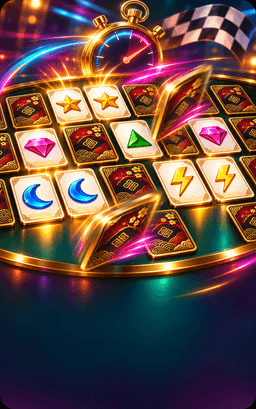
Memory Match Race
- Both players get the same 24 cards, face down — 12 pairs — on the same 2-minute clock.
- Tap a card to turn it over, then tap another. If they match, the pair stays face up. If not, both turn back over — remember where they were.
- Most pairs wins; with the same number of pairs, whoever got there first wins. Clearing all 12 pairs ends the race on the spot.
- Done early? Lock in — that ends your race only; your opponent plays on until they lock in too or their clock runs out. Quitting, closing the window and not coming back within 10 seconds, or not turning one card over is a forfeit.
Mahjong Tile Race
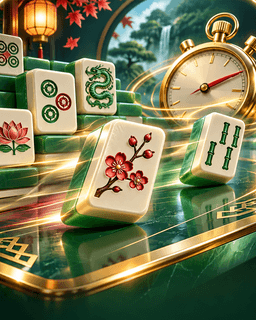
Mahjong Tile Race
- Both players get the same 78 tiles, stacked in four layers, and the same 3-minute clock. Every deal can be cleared.
- Tap two free tiles with the same face to take them off. A tile is free when nothing is on top of it and nothing is on its left or on its right. Blocked tiles show a little darker.
- A tile's face shows once part of it is uncovered. The small number or letter in the corner is the tile's value: dots, bamboo and characters run 1 to 9; then the four winds (E, S, W, N) and the three dragons.
- Most pairs wins; on a tie, whoever got there first. Clear every tile and you win on the spot. If no pair is left to take, your race ends there — so think about which pair to take when there's a choice.
- Done early? Lock in — your opponent plays on to the end of their own clock.
Chess
- Standard chess rules. White is drawn at random and moves first.
- Tap a piece to see where it can go, then tap the square. A pawn reaching the last rank becomes the piece you choose. Castling, en passant and promotion all work as usual.
- Checkmate wins. Stalemate, not enough pieces left to mate, the same position three times, or fifty moves each without a capture or pawn move is a draw — and either player can offer a draw.
- Each player has a clock that runs only on their turn, starting with their first move. Your first move must come within 30 seconds. If your clock runs out you lose — unless your opponent has too few pieces to ever mate, then it's a draw.
- Resigning, or closing the window and not coming back within 10 seconds, loses the game.

Chess Blitz
- 3 minutes each, plus 2 seconds added after every move.

Chess Classic
- 10 minutes each for the whole game.
Four in a Row
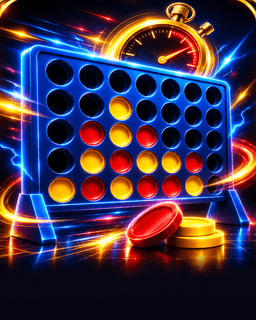
Four in a Row Best of 3
- A board of 7 columns and 6 rows. Tap a column to drop a disc — it falls to the lowest empty space. Red goes first.
- Get four of your discs in a line — across, down or diagonally — to win the game. If the board fills up with no line, that game is a draw and is played again.
- Going first is an edge, so every match is a best of 3: you take turns going first, and the first to win 2 games takes the match (level after 5 games, the match is a draw).
- One clock for the whole match: 3 minutes plus 3 seconds a move. Your first move must come within 30 seconds. Running out of time, resigning, or closing the window and not coming back within 10 seconds loses the match.
Hex
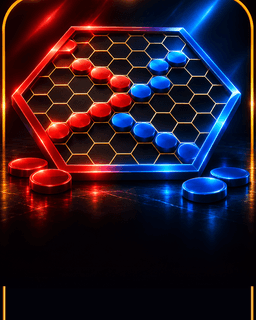
Hex Blitz
- A board of 11 × 11 hexagons. Red owns the top and bottom edges, Blue the left and right. Take turns placing a stone on any empty cell; Red goes first.
- Join your two edges with an unbroken chain of your stones and you win. Someone always does — Hex can never be a draw.
- Going first is an edge, so on Blue's first turn Blue may swap: take Red's stone as its own (it moves to the matching cell across the board), and Red plays next.
- 3 minutes each, plus 2 seconds added after every move. Your first move must come within 30 seconds. Running out of time, resigning, or closing the window and not coming back within 10 seconds loses the game.
Gomoku
Gomoku Blitz
- A 15 × 15 board; stones go on the points where the lines cross. Black and White take turns placing one stone.
- Five or more of your stones in an unbroken line — across, down or diagonal — wins. If the board fills up first, it's a draw.
- Black would have a big edge going first, so the opening is Swap2. The Opener (drawn at random) places three stones: Black, White, Black. The other player then chooses: play Black, play White, or place two more stones (White, then Black) and let the Opener choose. White moves next.
- 5 minutes each, plus 3 seconds added after every move. Your first move must come within 30 seconds. Running out of time, resigning, or closing the window and not coming back within 10 seconds loses the game. You can offer a draw.
Gomoku Classic
- The same rules and the same Swap2 opening as Gomoku Blitz.
- 10 minutes each for the whole game, with no time added per move. Your first move must come within 30 seconds. Running out of time, resigning, or closing the window and not coming back within 10 seconds loses the game. You can offer a draw.
Twist Five

Twist Five Best of 3
- A 6 × 6 board made of four quarters. On your turn, place a stone on any empty cell, then twist any one quarter a quarter-turn, either way. Black goes first.
- Five of your stones in a line — across, down or diagonal — wins. If your stone makes five before you twist, you win at once. A twist that lines up five for both of you is a draw; one that lines up only your opponent's five makes them the winner. A full board is a draw.
- Best of 3: first to 2 game wins, and you take turns going first. A drawn game is played again. Between games you can secretly double up.
- One clock for the whole match: 5 minutes plus 3 seconds a move. Running out of time, resigning, or closing the window and not coming back within 10 seconds loses the match.
Chinese Chess
- Chinese Chess (xiangqi): a 9 × 10 board with a river across the middle and a palace (the square with the cross) at each end. Pieces stand on the points, not in the squares. Red is drawn at random and moves first.
- General (帥/將, K): one point along a line, inside the palace. Advisor (仕/士, A): one point diagonally, inside the palace. Elephant (相/象, E): two points diagonally — not if the point between is taken — and never across the river.
- Horse (傌/馬, H): one point along a line, then one diagonally outward — unless something stands on that first point. Chariot (俥/車, R): any distance along a line, like a rook. Cannon (炮/砲, C): moves like the chariot, but captures only by jumping over exactly one piece.
- Soldier (兵/卒, P): one point forward; once across the river, also one point sideways. It never moves back.
- The two generals may never face each other on the same file with nothing between. You may not leave your general in check.
- Checkmate wins — and so does leaving your opponent with no legal move at all. If the same position comes up three times, a player who checked on every one of their moves in between loses (perpetual check); otherwise it's a draw. Sixty moves each without a capture, or neither side having a piece that can cross the river, is a draw. Either player can offer a draw.
- Each player has a clock that runs only on their turn, starting with their first move. Your first move must come within 30 seconds. If your clock runs out you lose — unless your opponent couldn't possibly mate, then it's a draw. Resigning, or closing the window and not coming back within 10 seconds, loses the game.
Chinese Chess Blitz
- 3 minutes each, plus 2 seconds added after every move.
Chinese Chess Classic
- 10 minutes each for the whole game.
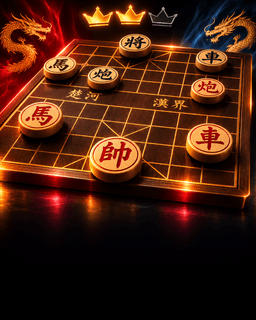
Chinese Chess Best of 3
- First to win 2 games takes the match. You take turns playing Red; a drawn game is played again (after 5 games level, the match is a draw). One clock for the whole match: 10 minutes plus 3 seconds a move. No draw offers.
Checkers
- American checkers on the dark squares of an 8 × 8 board. Black is drawn at random and moves first.
- Pieces move one square diagonally forward. Jump an opponent's piece diagonally to capture it — captures are compulsory, and if your piece can jump again it must keep going (you can pick which capture to make).
- Reach the far row and your piece is crowned a king: it moves and captures backwards too. A piece crowned during a jump stops there for that move.
- You win when your opponent can't move — no pieces left, or all blocked. The same position three times, or 40 moves each with no capture and no plain piece moving, is a draw — and either player can offer one.
- Each player has a clock that runs only on their turn, starting with their first move. Your first move must come within 30 seconds. Out of time loses. Resigning, or closing the window and not coming back within 10 seconds, loses the game.

Checkers Blitz
- 3 minutes each, plus 2 seconds added after every move.

Checkers Classic
- 10 minutes each for the whole game.
International Draughts
- International rules on a 10 × 10 board, 20 pieces each on the dark squares. White is drawn at random and moves first.
- Pieces move one square diagonally forward, but capture forwards and backwards. Captures are compulsory, and you must make the capture that takes the most pieces (a king counts as one). Pieces are lifted when the move ends, and none can be jumped twice.
- A piece that ends its move on the far row becomes a king. Kings fly: they move any distance along a diagonal and capture a piece at any distance, landing on any free square beyond it.
- You win when your opponent can't move. The same position three times, or 25 moves each with only kings moving and nothing taken, is a draw — and either player can offer one.
- Each player has a clock that runs only on their turn, starting with their first move. Your first move must come within 30 seconds. Out of time loses. Resigning, or closing the window and not coming back within 10 seconds, loses the game.

Draughts Blitz
- 5 minutes each, plus 3 seconds added after every move.
Draughts Best of 3
- First to win 2 games takes the match. You take turns to start each game.
- A drawn game is played again; level after 5 games is a drawn match.
- One clock for the whole match: 10 minutes each, plus 3 seconds after every move. No draw offers.
Reversi
- Othello rules on an 8 × 8 board, starting with four discs in the middle. Black is drawn at random and moves first.
- Place a disc so that it traps one or more straight lines (across, up and down, or diagonal) of your opponent's discs between it and another of your discs. Every trapped disc flips to your colour.
- If you have no move that flips a disc, you pass and your opponent moves again. When neither side can move, the game is over: the most discs wins, and equal discs is a draw. Either player can also offer a draw.
- Each player has a clock that runs only on their turn, starting with their first move. Your first move must come within 30 seconds. Out of time loses. Resigning, or closing the window and not coming back within 10 seconds, loses the game.

Reversi Blitz
- 3 minutes each, plus 2 seconds added after every move.
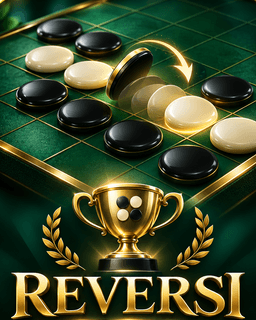
Reversi Best of 3
- First to win 2 games takes the match. You take turns to move first.
- A drawn game is played again; level after 5 games is a drawn match.
- One clock for the whole match: 6 minutes each, plus 2 seconds after every move. No draw offers.
Backgammon
- Standard backgammon: 24 points, 15 checkers each. You move your checkers round the board towards your home board (your last six points, bottom right) and then bear them off. White is drawn at random and rolls first.
- Each roll of the two dice is two moves — one checker by each number, or one checker by both. A double is four moves. You must use both numbers if you can; if you can only use one, it must be the larger one when that's possible. If you can't move at all, your turn passes by itself.
- You can't land on a point your opponent holds with two or more checkers. Land on a point with just one of theirs and you hit it: it goes to the bar, and they must bring it back in on your home board before they move anything else.
- Once all 15 of your checkers are in your home board you can bear them off: a checker on the point matching a die comes off, and a bigger die takes off your farthest checker. The first to bear off all 15 wins.
- The dice come from the game's seed, fixed before the first roll; once the game is over you can check it. Each player has a clock that runs only on their turn, starting with their first move. Your first move must come within 30 seconds. Out of time loses. Resigning, or closing the window and not coming back within 10 seconds, loses the game.

Backgammon Blitz
- 3 minutes each, plus 5 seconds added after every move.
Dots and Boxes
- A 5 × 5 grid of boxes, drawn on 6 × 6 dots. Red is drawn at random and goes first.
- On your turn, draw one line between two dots next to each other (across or down). Draw the fourth side of a box and it's yours — and you draw another line straight away. One line can close two boxes at once.
- Careful with third sides: a box with three sides drawn is a gift to whoever moves next. When every line is drawn, the most boxes wins — with 25 boxes there's always a winner.
- Each player has a clock that runs only on their turn, starting with their first line. Your first line must come within 30 seconds. Out of time loses (a draw if the other side couldn't catch up any more). Resigning, or closing the window and not coming back within 10 seconds, loses the game.
Dots & Boxes Blitz
- 2 minutes each, plus 2 seconds added after every line.
Sim
- Six dots (A to F) and the 15 lines joining every pair of them. Red is drawn at random and goes first.
- On your turn, colour one line that nobody has coloured yet. If three of your own lines make a triangle — joining three of the dots — you lose.
- Someone always makes a triangle by the 15th line, so every game has a winner. The trick is to leave yourself safe lines for longer than your opponent.
- Each player has a clock that runs only on their turn, starting with their first line. Your first line must come within 30 seconds. Out of time loses. Resigning, or closing the window and not coming back within 10 seconds, loses the game.

Sim Blitz
- 1 minute each, plus 2 seconds added after every line.
Cram
- A 7 × 7 board of empty squares. Red is drawn at random and goes first.
- On your turn, place one domino on two empty squares side by side — across or down, whichever you like. Both players use the same dominoes and the same squares.
- Whoever can't place a domino on their turn loses. The trick is to leave gaps only one domino can fill, and to count how many are left.
- Each player has a clock that runs only on their turn, starting with their first move. Your first move must come within 30 seconds. Out of time loses. Resigning, or closing the window and not coming back within 10 seconds, loses the game.

Cram Blitz
- 2 minutes each, plus 2 seconds added after every move.
Word Board
- A 15 × 15 crossword board and a bag of 100 letter tiles (two of them blank — they can be any letter but score nothing). You each hold 7 tiles. The first player is drawn at random.
- On your turn, place tiles in one row or one column, with no gaps, to make words reading across or down. The first word must cover the centre ★; after that, every word must join the tiles already on the board. Every word you make — including the short ones crossing your tiles — must be in the dictionary.
- Each tile has a points value. Coloured squares count once, for the tile placed on them: DL doubles a letter, TL triples it, DW doubles the word, TW triples it (the ★ is a DW). Use all 7 tiles in one turn for 50 more. After you play, you draw back up to 7.
- Instead of placing, you can exchange any of your tiles for new ones (while 7 or more are left in the bag) or pass. The game ends when someone uses their last tile with the bag empty — they add the other player's leftover tiles to their score and the other player loses them — or after six scoreless turns in a row, when each player loses their own leftover tiles. Highest score wins; equal scores are a draw.
- Each player has a clock that runs only on their turn, starting with their first move. Your first move must come within 60 seconds. Out of time loses. Resigning, or closing the window and not coming back within 10 seconds, loses the game.
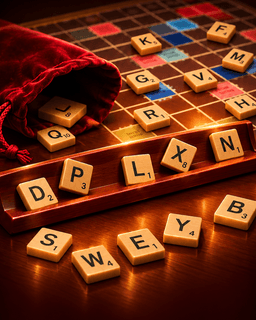
Word Board Blitz
- 5 minutes each, plus 10 seconds added after every move.
Tournaments
- Sit & Go: pick an entry and you're in — it starts the moment every seat is filled. Leave before it starts and you're out with nothing lost.
- Drawn games are replayed. Quitting, closing the tab or not showing up for a game puts you out.
1 v 1 tournaments
- Four players: two semi-finals, then the winners meet in the final.
- Dominoes Blitz and Dominoes Swap Hands play best of three; Mancala plays single games.
Dominoes Four Man tournament
- Eight players at two tables of four.
- The top two at each table go through to the final table.